

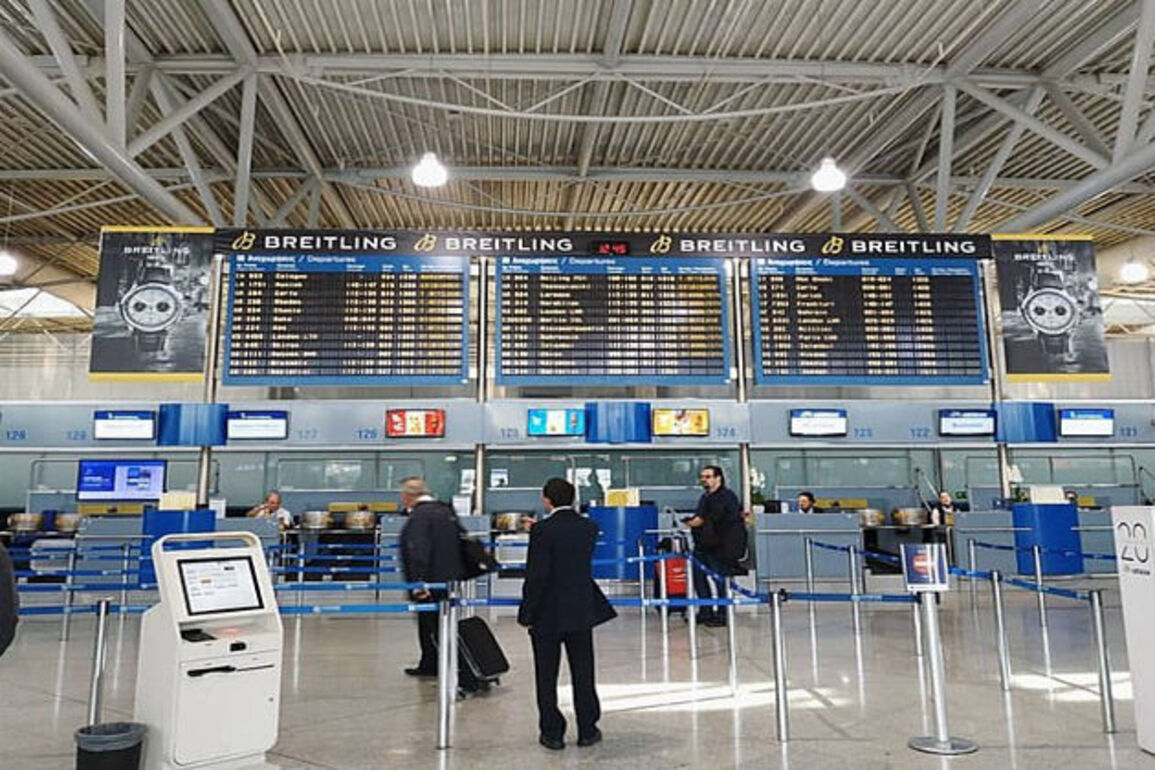
ATHENS, Greece: Airport operations across Greece came to a virtual standstill for several hours following the collapse of radio frequencies that crippled air traffic communications, stranding thousands of travellers.
The disruption started at 8:59 a.m. local time, when most aviation radio frequencies were hit by heavy interference. As a safety measure, Greece shut down its airspace. Officials said the incident was unprecedented and caused delays to dozens of flights during a hectic holiday weekend.
Greece's civil aviation authority said an unknown "noise" affected the radio channels, but the cause was not clear. The authority said the noise was continuous and uncontrolled.
Flights across the country were affected for several hours, and authorities only allowed aircraft to fly over Greek airspace. Air traffic controllers said they suddenly lost all radio contact with planes in the air and could not communicate with them.
Panagiotis Psarros, head of the Greek air traffic controllers' association, said the incident exposed weaknesses in Greece's outdated systems, which should have been replaced years ago.
By the afternoon of January 4, limited services resumed after pilots switched to backup radio frequencies. By late afternoon, about 45 flights per hour were departing from Greek airports. Officials said flight safety was not put at risk.
The air traffic controllers' association said the failure affected all ground radio frequencies and some used by Athens Approach, which manages flights in and out of Athens' main airport. Despite the problems, controllers used every available method to keep flights safe and described the incident's scale as unacceptable.
Psarros said the issue appeared to be a collapse of central radio systems in the Athens and Macedonia control centers, which oversee a large area of Greek airspace.
In a separate incident, Italy's Bergamo Orio al Serio airport, a central Ryanair hub near Milan, stopped flights on the evening of January 3 because of technical problems with its landing system and poor visibility. Thousands of passengers were left stranded overnight.
The airport operator said the technical issue was fixed around midnight, but warned that flights could still be delayed or cancelled. Local media reported that 26 departing flights were cancelled, six were diverted to other airports, and seven were rescheduled for Sunday. Many passengers spent the night at the airport, with some sleeping on the floor and near baggage belts.