

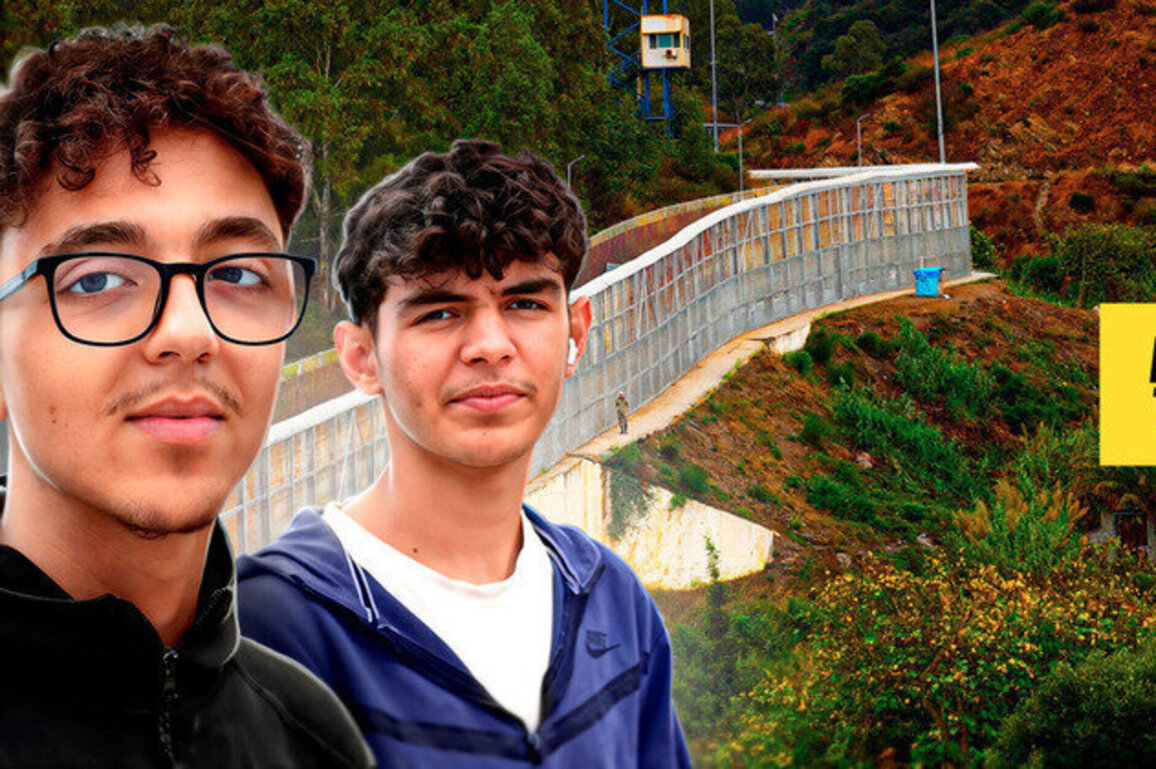
Its noon, on a rare cloudy day in the hills above Ceuta. Around 60migrantswait patiently outside of the social canteen Luna Blanca, an NGO feeding hundreds of people on this smallSpanish exclave.
For some, its a daily stop: a place to get a hot meal, see familiar faces and socialise. Most of them arrived from sub-Saharan Africa or neighbouringMoroccoover the past two years. Among them are Adam and Anas, two 18-year-old Moroccans, who arent here to eat today: they came to serve the days paella alongside Nihad, a 32-year-old cook from Ceuta.
Adam and Anas look like brothers. They tease each other like children who have grown up together. In reality, they met only last year at Ceutas reception centre for unaccompanied minors, where both were placed upon arriving onto Spanish territory.
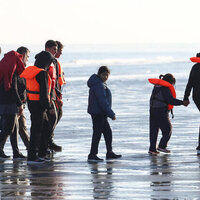
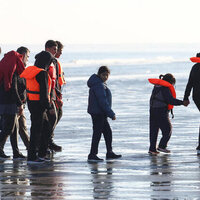
They remember clearly the day they swam across the border, braving the fog and pouring rain. I was supposed to go with another guy, but he got scared, so I went alone, Adam says. I stayed for two days in a house nearby, checking weather apps to monitor the sea. When I saw it was high tide and that the Moroccan guards wouldnt be able to reach me, I went for it. Only my father and a friend knew, they both prayed for me.
Adam swam for two hours, Anas for nearly six. I went down to the shore several times without ever leaving, Anas recalls. And the first time I finally threw myself in, it worked. I wouldnt have tried a second time.
Ceuta, a gateway to Europe
The two friends are among the 28 migrants who managed to reach Ceuta by sea in 2024. But the crossing often ends in tragedy. Many bodies wash up here, says Nihad, looking out towards the beach her home overlooks. Maybe most people never reach the shore. Families often come looking for their loved ones bodies. Its surreal, but its todays reality. In 2025, at least 30 migrants died trying to reach Ceuta.
On her phone, Nihad scrolls through dozens of videos of mass arrivals. The largest dates back to 2021, whenmore than 8,000 people crossed the borderin just two days. Since then, the numbers have dropped; around 3,200 irregular entries this year, according to Spains interior ministry, compared with more than 11,600 in 2015 at the height of the migrant crisis.
But Ceuta, just under 19 km, remains far too small to deal with such numbers. Reception centres for both minors and adults are full, leaving dozens of migrants to sleep on the streets or near the port, watching the ferries depart towards what they hope will be their future: Europe.
Adam and Anas share that dream. Im waiting for my papers so I can reach the mainland. I want to work, continue my studies a bit, and save my family. After that, Id like to go to Germany, says Anas, gazing into the distance. Adam nods: My dream, if I get my papers, is to go to Spain first, stay two years, long enough to find stability. And with Gods will, then go on to the Netherlands.
Youll say that now, you dont know how cold it is there! Nihad laughs affectionately. She has promised to look after them until the day they leave.
Originally published on France24