


After a meeting in Geneva Thursday, the European Broadcasting Union, orEBU, decided not to call a vote on Israel's participation, saying it had instead passed new rules aimed at discouraging governments from influencing the contest.
Immediately following the announcement, the Dutch, Spanish, Irish and Slovenian broadcasters said they would withdraw, meaning singers from their countries would not compete in next year's contest, held in Vienna.
Dutch broadcaster AVROTROS said that Israel's participation "is no longer compatible with the responsibility we bear as a public broadcaster".
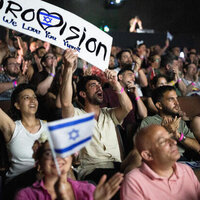
Both the Israeli government and opposition leaders celebrated the country's inclusion.
Golan Yochpaz, CEO of Israeli broadcaster KAN, likened the efforts to exclude Israel to a form of "cultural boycott".
Rounding on the countries withdrawing, Foreign Minister Gideon Saar said on X: "The disgrace is upon them."
Eurovision will 'respect' any boycott decisions over Israel
Participation 'unconscionable' for Ireland
The Eurovision Song Contest dates back to 1956 and reaches around 160 million viewers, according to the EBU.
Israel's participation has dividedopinion in the competition that has a history of entanglement in national rivalries, international issues and political voting.
Its 2025 entrant, Yuval Raphael, was at the Nova music festival, a target of the 7 October, 2023 attack by Palestinian militant group Hamas on Israel that triggered thewar inGaza.
A total of 1,200 people were killed and 251 taken hostage in the assault byHamas, according to Israeli tallies. More than 70,000 people have been killed in Gaza in the ensuing conflict, according to health authorities in the enclave.
Irish broadcaster RTE said it felt "Ireland's participation remains unconscionable given the appalling loss of lives in Gaza and the humanitarian crisis there which continues to put the lives of so many civilians at risk".
Jose Pablo Lopez, head of Spanish state broadcaster RTVE said on X: "What happened in the EBU Assembly confirms that Eurovision is not a song contest but a festival dominated by geopolitical interests and fractured."
RTV Slovenija said it together withSpain, Montenegro, theNetherlands, Turkey, Algeria and Iceland requested a secret vote on Israel's participation, but it was not held.
Eurovision returns amid protests over Palestine, Pride flags and parody lyrics
Protecting Eurovision's neutrality
Eurovision is regularly the scene of geopolitical conflicts.Russia was excludedfollowing its invasion of Ukrainein 2022. Belarus was excluded a year earlier after the disputed re-election of President Alexander Lukashenko.
Other countries could boycott the next Eurovision, to be held in Vienna in May. Icelandic public broadcaster RUV said its board will make a decision on Wednesday on whether or not to participate.
Germany, a major Eurovision backer, had signalled it would not take part if Israel was barred. Germany's culture minister Wolfram Weimer told the Bild newspaper he welcomed the decision.
"Israel belongs to the Eurovision Song Contest like Germany belongs to Europe," he said.
German broadcaster backs Israel in Eurovision debate
Martin Green, the contest's director, said EBU members showed they wanted to protect the neutrality of the competition.
"Eurovision was bornfrom the ashes of the Second World War," he said. "It was designed to bring us together, and it will hit bumps in the road, and we have a complicated world, but we hope it's a temporary situation, and we'll move forward."
(with newswires)
Originally published on RFI