

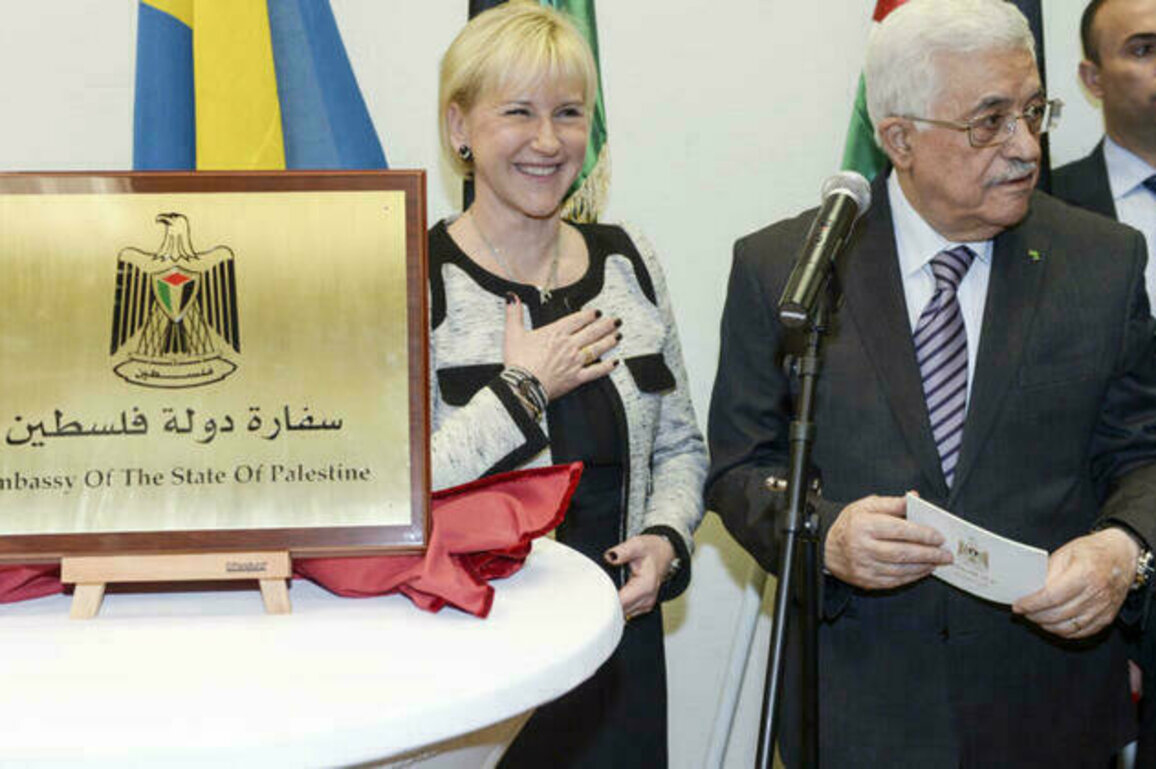
In the fall of 2014, Sweden became the first western EU country to recognise the state of Palestine. The small Nordic nation had hoped to spark a European-wide tide of recognitions. Instead, it found itself isolated and left to pay a steep price in its diplomatic relations with Israel. More than a decade on, here is what France and other Western states who have recently followed suit can learn from Sweden's experience.
Swedens Foreign Minister Margot Wallstrom had not even been on the job for a month when she announced her country was officiallyrecognising the state of Palestine.
We want to contribute to creating more hope ... among young Palestinians and Israelis who might otherwise ... [believe] there is no alternative to violence and the status quo,she wrotein the nations biggest newspaper Dagens Nyheter.
It was October 30, 2014, and Sweden was the first country to recognise Palestinian statehood as a currentEuropean Unionmember. (Some eastern European countries, including Poland and Hungary, had already done so in connection with Palestines declaration of independence in 1988, but the acknowledgements carried less weight since they were made prior to EU admission.)
Watch'Right time' to recognise Palestinian state, Swedish FM tells FRANCE 24
The Socialist-led government in Stockholm had hoped that the move which was widely described as both surprising and bold in European media would put the Israelis and Palestinians on a more equal footing, and thus help revive the hopes of a two-state solution.
Some will argue that the decision is premature, Wallstrom wrote. Im afraid it might be too late.
Gaza had also just been the scene of a third armed conflict: the 50-day war had taken place in the Hamas-run enclave over the summer, and more than2,200 Palestiniansand just over 70 Israelis had been killed.
Going at it alone
Sweden wanted to steer the broaderIsraeli-Palestinian conflictaway from confrontation and towards diplomacy, Anders Persson, a specialist on the EUs role in the Israeli-Palestinian conflict and senior lecturer at Swedens Linnaeus University, recalled of the decision.
But for the Swedish plan to work, the tiny nation of barely 10 million needed other, more powerful, Western countries to follow suit.
No one did.
I think they were afraid of the Israeli backlash, and that it could hurt relations with [Israels main ally] the United States, Persson said.
Instead, he said, many nations including Britain, Spain, France and Ireland chose to pass non-binding resolutions recognising Palestinian statehoodwhen the timing was right.
So Sweden was on its own, he said.
Death threats
Israel reacted to Sweden's decision with fury. Tel Avivimmediately recalled its ambassador, and local trade groups threatened withboycotts.
Israels then foreign minister Avigdor Liberman labelled the decision unfortunate andridiculed the Swedish governmentby saying that relations in the Middle East are more complex than one of IKEAs flat-pack pieces of furniture".
When Wallstrom, in 2016, called for an investigation into whether Israeli killings of Palestinian knife-attackers might constitute extrajudicial killings she was declaredpersona non grata. She was not allowed back to Israel for the rest of her term, which ended in 2019.
In arecent interview with French daily Le Monde, Wallstrom, who is now retired, said the years following Swedens recognition of the state of Palestine, weighed heavily on both her and her family.
My family and I received death threats, and my security had to be reinforced. She said she was also accused of anti-Semitism. That was perhaps the most offensive, she told the newspaper.
Still, 11 years after the fact, Wallstrom is convinced Sweden made the right decision in recognising a Palestinian state.
If the European Union had committed itself back then, and used the political and economic tools it has at its disposal to stop the settlement expansion and encourage a two-state solution, we might not have been where we are today.
Laid the ground?
Persson said that although Swedens recognition may not have changed much on the ground more than 65,000 Palestinians have been killed in the latest Gaza war following Hamass deadlyOctober 7 attackson Israel two years ago it is reasonable to believe it at least laid the ground for the wave of recognitions that began last year, and now includes major Western powers such asBritainandFrance.
Although Israels Prime MinisterBenjamin Netanyahu's government has warned of a unilateral response, Persson said a key EU player like France is unlikely to pay the price that Sweden did.
Read moreRecognising Palestinian state could trigger 'unilateral' action, Israel warns
The main difference, he said, is that France is not standing alone, and economically and politically, it is a much bigger force to reckon with.
Israel doesnt want to become more isolated or have more sanctions imposed on it than already is the case, he said.
But Israel could retaliate in other ways without directing it at France: By worsening the situation on the ground through annexations and so on or by rendering the prospect of a Palestinian state more difficult.
Some countries, however, have seen their recognitions drive their diplomatic ties with Israel to anall-time low. One example is Spain, which along with Norway and Ireland spearheaded the latest acknowledgement wave.
While Israel has yet to reinstall its ambassador to Madrid, Spain has imposed a ban on the sale of arms and military equipment to the country. Prime MinisterPedro Sanchezhas also called for Israel to be excluded from international sports events.
Originally published on France24