

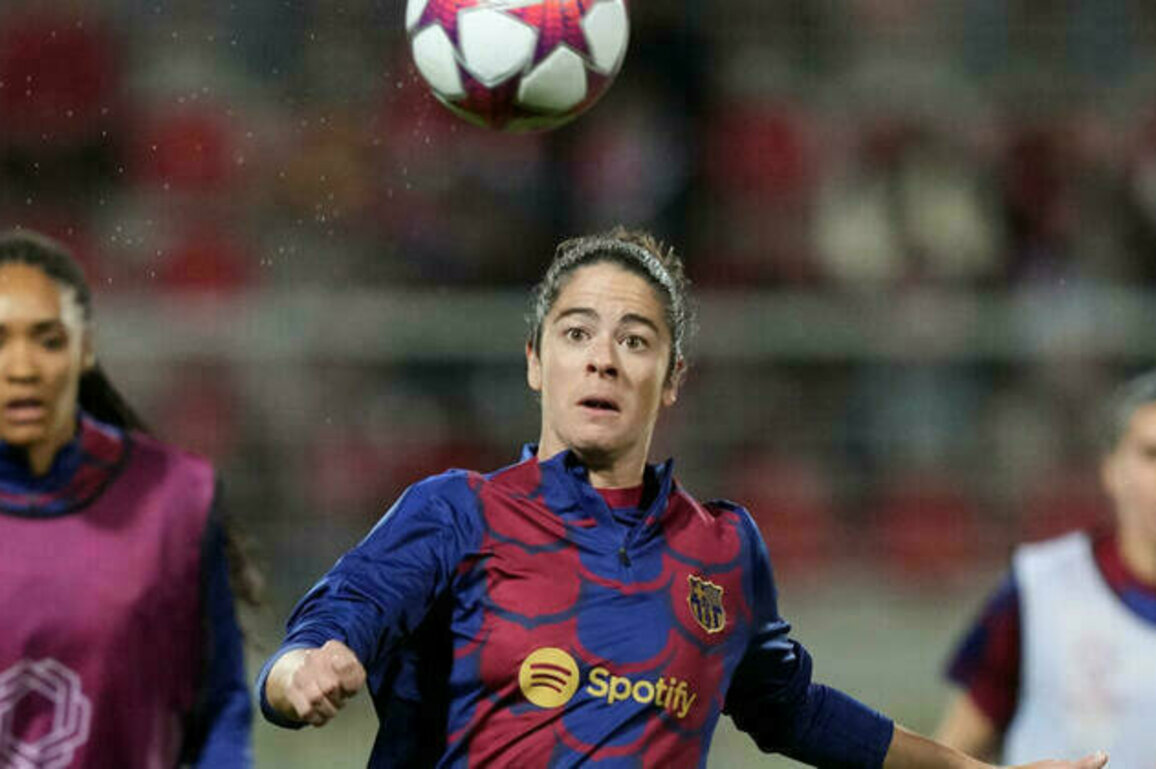
The Spanish womens national football team has had to overcome sexism and a lack of funding in their gradual rise over the past decade to the peak of the womens game, eventually winning a World Cup title in 2023. They face England in the European Championship final on Sunday.
If the womens soccer players ofSpainhave gone from nobodies to title contenders in less than a decade, it hasnt come easy.
The national team has had to fight for better coaching, decent travel conditions, and modern training facilities.
It paid off with aWorld Cuptitle in 2023, the Nations League crown last year, and on Sunday they faceEnglandin the European Championship final.
Read moreSpain beat Germany in extra time to set up Euro 2025 final against England
It has been a constant with the national team that we have had to fight for acceptable work conditions that would allow us to play at our best, former Spain defender Marta Torrejn told The Associated Press by phone on Friday.
Torrejn lived through the lean years, the time when playing for her country felt like, in her words, a waste of time.
And she knows from talking withBarcelonateammates who still play for their country how much things have improved.
Torrejn retired from international soccer after the 2019 World Cup as Spains then most-capped player with 90 appearances. She has since helped Barcelona win threeChampions Leaguetitles and a slew of other trophies.
Read moreEngland stuns Italy in extra-time comeback to reach Women's Euro 2025 final
She also played a part in one of the revolts Spains women have staged to demand more from the men who run the game.
After the 2015 World Cup, Torrejn and other players successfully pushed for the removal of coach Ignacio Quereda, who had run the team for nearly three decades, for his poor preparation ahead of the teams first appearance in the competition.
Quereda was later accused by former players of verbal abuse, an allegation he denied.
I enjoyed playing for the national team, but the preparation and attention to the player was minimum. It felt, to put it bluntly, like a waste of time, Torrejn said. The level of practice and the level of physical training both plummeted compared to what we had (at Barcelona). It was like taking a step back.
I am told that isnt the case now, and I am very glad to hear that.
Torrejn said she saw steps in the right direction under former Spain coach Jorge Vilda, who replaced Quereda, but felt there was still more untapped potential in the team when she retired.
After Torrejn quit the team, some players announced in 2022 they would no longer play for Vilda unless he ran a more professional operation. He was backed by the federation. Some players returned to play for him, and the team made history by winning the 2023 World Cup.
The celebrations were overshadowed by the behavior of then-federation presidentLuis Rubiales, who kissed a player on the lips without her consent during the awards ceremony in Sydney.
Vilda backed Rubiales, but he was swept away with his boss when the players stood up to force change, from the removal of Rubiales to improving the travel, preparation and staffing of the team.
Torrejn said she had heard from Alexia Putellas and Irene Paredes, stalwarts of Spain and Barcelona, that things are better since Rubiales and Vilda left.
New coach Montse Tom has enhanced the training methods. Spain leads the way at the Euros for goals scored, ball possession, passing accuracy and clean sheets.
In Spains 1-0 semifinal win over Germany, Aitana Bonmat leaned on the teams analysts, who informed her the opposing goalkeeper tended to leave her near post unprotected. The result was an exquisite winner from a tight angle.
Spain midfielder Patri Guijarro agrees with Torrejn that the sustained investment Barcelona has provided for the past decade in the womens game has boosted the national team.
Each and every day we work well in our clubs and I think that is reflected in the achievements of the clubs but also in the national team, Guijarro said at Spains camp in Lausanne, Switzerland, on Friday.
Guijarro also credits the professionalization of Spains womens league in 2021, which allowed players to dedicate ourselves fully to soccer.
Guijarro is one of 11 Barcelona players on Spains 23-member squad. The Barcelona contingent includes Bonmat and Putellas, who have split the last four Ballon dOr awards between them.
Former Barcelona official Xavier Vilajoana oversaw the womens team and the clubs training academy from 2015-2020. During that time, the club dramatically increased its funding for womens soccer and built a training program for girls.
Vilajoana said one critical decision was having the same coaches train the boys and girls teams. That way the Barcelona style was instilled in all the kids, and that ball-possession, short-passing and pressure became fundamentals of the womens teams as well.
Lets not fool ourselves, we spent many years in a very sexist society and that was reflected in womens soccer. So clearly the change in the mentality of society has helped, Vilajoana told the AP. But I also believe the style of play Barca has helped see women players in the same way (as the men).
In the background, Spains strong feminist movement helped get the public behind the players.
There were many of us players who gave it our all for the national team but werent able to get this far, Torrejn said. The one thing we knew is that we had talent. We just needed more support.
(FRANCE 24 with AP)
Originally published on France24